

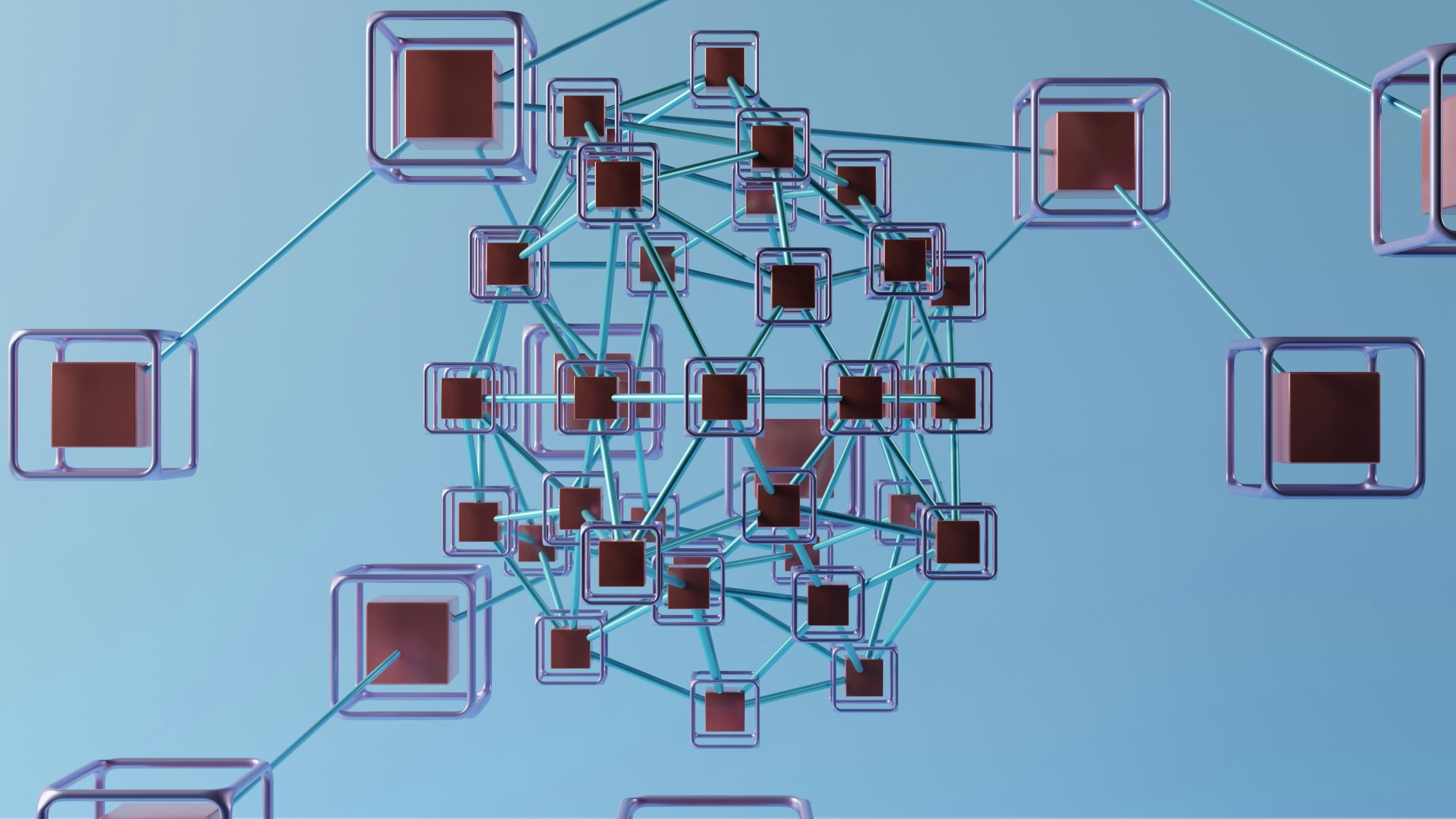
The Seven Dimensions of Enterprise AI
The Seven Dimensions of Enterprise AI names the seven decisions behind an AI product that works in production, and model selection is the smallest of them.
Model selection is 1% of the design work in a production enterprise AI system. Six other dimensions decide whether it works, and most teams never name them.
Model selection is the smallest decision in a production enterprise AI system. And I know how that sounds in a year when every launch and every benchmark chart is about models. But I have spent more than three years in enterprise AI and the past six months building one of these systems, and if I am honest about where the hours went, model selection is close to a rounding error. Call it 1% of the real design work.
1%
And the other 99% went into six things that never make a headline. What the system is allowed to see. What counts as a good decision in the domain. The order the parts talk to each other in. Where authority stops. Who reviews the boundary case. How the thing gets better next quarter instead of worse.
The framework I work from has a name. The Seven Dimensions of Enterprise AI. Data Architecture, Domain Logic, Orchestration, Models & Agents, Governance & Containment, Human Judgment, Calibration. Seven names, and the useful thing about naming them is that you are making all seven decisions anyway, badly or on purpose. And naming them is what makes it on purpose.
And they run at the same time in practice. That one took me longer to accept than it should have. You do not finish one and move to the next. Move anything and the other six move with it, and that is the part most teams find out the hard way.
Data Architecture Is the Decision About What the System Can See
Three concerns live here. What you choose to measure. Whether a measurement is trustworthy right now. And what to do when a measurement is simply missing.
So I want to take the last one, because it is the one teams skip.
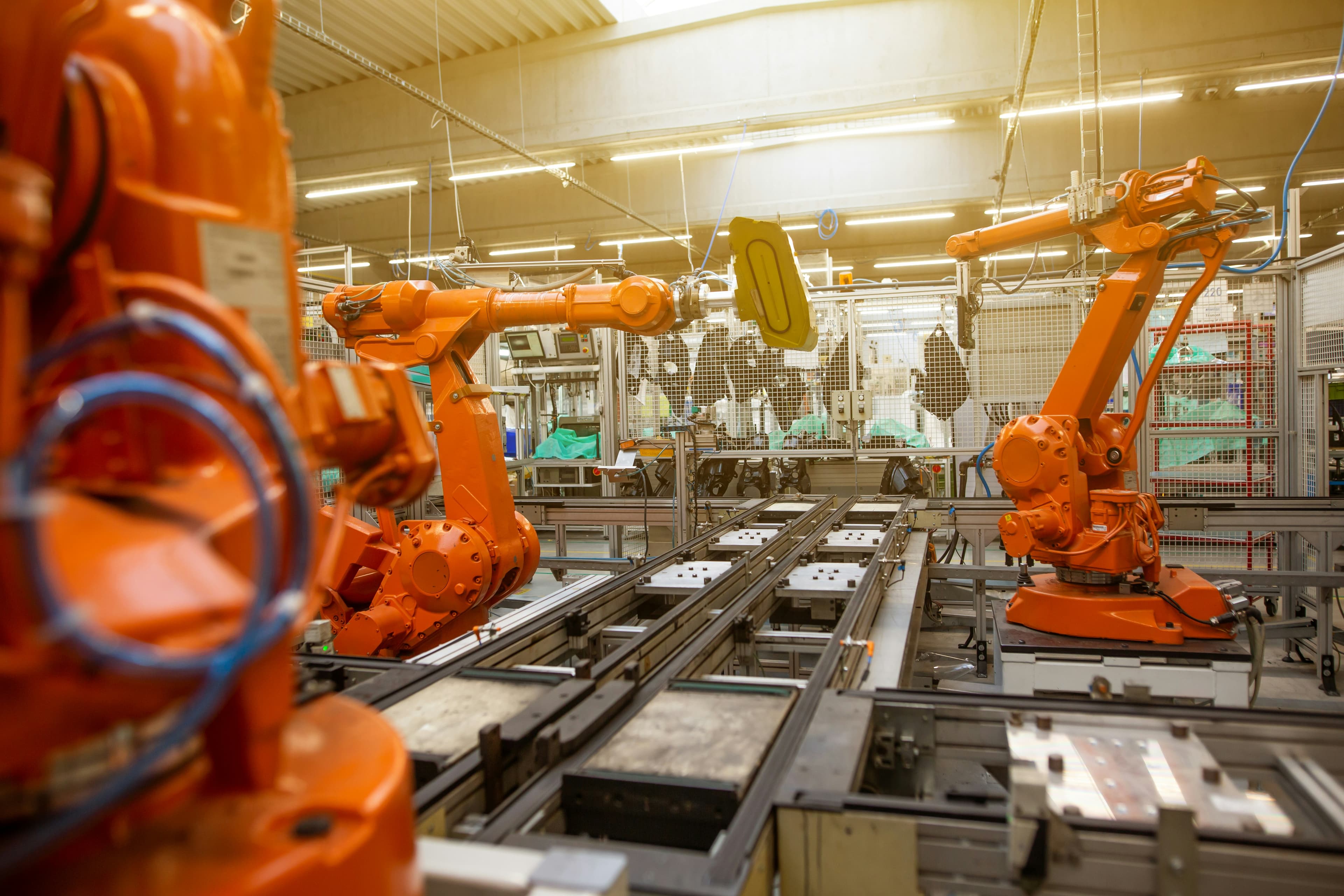
A pick-and-place robot working from stale positioning data does not know it is wrong. It moves with full confidence toward coordinates that stopped being true a while ago. And the collision does not show up in the model logs. It shows up in the incident report. Same failure, different domain: something upstream is wrong, and every component downstream inherits it with no way to know.
TikSense pulls from three parallel data sources per creator. For a meaningful share of creators, one of them comes back empty, which is normal for commerce data. So the system flags the missing source before the multi-model analysis starts. A model handed incomplete input has no idea it is incomplete.
Domain Logic Is the Encoded Point of View
Models arrive with general capability and no opinion about your problem. Domain Logic is where the opinion gets written down, as rules, by someone who knows the domain, before any model gets a turn.
And Douyin gives you the clean version. The signals that predict watch time and the signals that predict purchase intent diverge for the same creator, routinely. Someone who holds attention is not the same person who drives transactions, and which one wins is a judgment about context. You can make that judgment before any model touches the data.
Building TikSense, I hit this one really hard. And standard engagement metrics collapsed to near zero for TikTok creators, regardless of how well they converted sales. A creator doing consistent commerce volume scored 49 on a standard engagement algorithm.
The metric was right, and useless for the decision in front of me. So the fix was to detect creator type first, and switch the scoring logic before anything moved upstream. That detection and switching logic is Domain Logic. And it does not show up in a training run. It shows up because you spent a long time watching the difference between attention and conversion, and then wrote it down.
When you can put the domain knowledge in the weights
But there is a faster path for teams that can pay for it. Fine-tuning on domain data, including the parameter-efficient methods like LoRA and QLoRA, puts domain knowledge into the weights instead of into prompts. The prerequisites are real: a labeled dataset big enough to matter, training compute, hosting, and somebody maintaining it as the domain shifts. Most teams at an early stage of a specific problem do not have that yet, and that is fine, because the rules version encodes what you know today, and it encodes it now.
Orchestration Is How the Parts Talk to Each Other
And orchestration is sequence and reasoning. What runs first, what runs in parallel, and what each part is allowed to see while it runs.
In TikSense, a routing AI agent runs before four parallel analysis tracks fire. It reads the creator and shapes everything downstream: which scoring logic applies, which prompts activate, which data sources get priority. I could remove it. The system would run faster, and every analysis would be worse. So I kept it, and I have stopped apologizing for the latency.
And ride-hailing makes the structure visible, because scale forces it out into the open. A small platform routing ten rides a day can survive on informal coordination. At ten million rides a day, pricing, dispatch, routing and ETA components negotiate through orchestration logic in under 800 milliseconds to produce one coherent thing: your ride arrives in four minutes at this price. Volume is what shows you which structure the system actually needs. At production scale the orchestration layer stops being a convenience.
Agent-native architecture is this dimension growing up. Once the components can reason, assess and route inside bounded authority, the same structure handles things nobody specified in advance. Same role in the system. Better parts performing it.
Models & Agents Are the Most Substitutable Parts
And this is the dimension everybody starts with, and it is the one that carries the least design risk. Models and AI agents handle the ambiguity and scale that rules cannot. They are also the parts you can swap.
TikSense runs multi-model, multi-agent analysis across four parallel tracks: content classification, audience assessment, commerce fit, visual selling quality. Picking the model for each track took an afternoon. Designing the agent architecture, defining each AI agent's authority boundaries, and getting four independent model outputs to reconcile into one coherent assessment took months.
And autonomous driving perception research shows the same shape. A 2026 review in Machine Learning and Knowledge Extraction found the counterintuitive result: more models with narrower scope produced more reliable output than fewer models with broad scope. Vehicles, pedestrians, cyclists, road signs, each handled by a specialized model, then a fusion agent reconciles. And a model that is excellent at vehicle detection can be mediocre at cyclist pose estimation, which is not a scandal. It is what specialization looks like. So no, the model is not the interesting choice. It is a substitutable part inside a system that has to hold together.
Governance & Containment Is Where Authority Stops
Here is the uncomfortable one.
Multi-agent systems need authority structures. But what an AI agent may decide is not the same as what it can do.
- 1A classification AI agent classifies and does not recommend.
- 2An analysis AI agent recommends and does not execute.
- 3An execution AI agent acts inside defined parameters and escalates above a threshold.
Past its ceiling, it escalates instead of stretching. And the hierarchy ends at a named human who owns the outcome. I call this the Agentic Authority Escalation Model.
Anthropic's April 2026 system card for Claude Mythos Preview says two things in one document. That it is their best-aligned model by a wide margin, and that it is the model they consider the largest alignment risk. That is not a contradiction, and it is the clearest public statement of the actual problem: alignment and containment are not the same thing. And a model can hold the right values and still reach past what the instruction covers into what the environment allows. Containment built for cooperation is a different architecture from containment built for capability.
Europe has been legislating this for years, and it is worth reading as architecture instead of paperwork. The EU AI Act makes documented risk management a technical requirement for high-risk AI, Article 9, which means it has to be auditable by construction. The revised Product Liability Directive extends strict liability to software and AI, so who owns the architecture decision has a legal answer now. And CE marking under Article 48 makes conformity a precondition for deployment. So I would not describe any of that as friction. It forces the containment decision to the moment it can still be made correctly, which is before deployment, not after.
Human Judgment Enters at the Boundary of Confidence
But Human Judgment gets framed as the safety net for when AI fails. That framing produces the wrong system. A well-designed system asks for a human when it reaches the edge of its own confidence, not when it produces an error. By the time you can see the error, the decision that caused it happened earlier anyway.
And consumer platforms processing millions of content decisions a day show the asymmetry. The AI agents identify, and humans act on the calls above the authority ceiling.
Governance & Containment decides where the boundary sits, and Human Judgment is what happens at it. In TikSense, when two assessment tracks disagree, the reviewer gets both outputs and the reasoning behind each. Not a blended score, which would be easier to build and worse to use. And that reviewer brings something no model carries: knowledge of that business's product line, experience with similar creator partnerships, a read on category fit.
And Human Judgment feeds the other six dimensions. Reviewer decisions change what Data Architecture tracks, which Domain Logic rules need adjusting, which authority boundaries are too loose, which Governance thresholds should move. The human is not a checkpoint at the end of the chain.
Calibration Is How the System Improves Instead of Degrades
But a system that does not improve does not stay neutral either. Data shifts. Creator behavior shifts. And in TikSense, calibration runs against outcomes: creators who were assessed, partnered with, and produced measurable commerce results.
10 million miles
And the autonomous driving loop makes the compounding visible. A perception agent misreads a scenario at 40 mph, and that misread becomes a calibration event. Every model trained after it handles that scenario differently. The system with ten million miles behind it is architecturally different from the one with a million. Same models, even. The calibration data changed what they learned to prioritize.

Without Calibration, the other six dimensions describe a snapshot. With it, they describe something that compounds.
The Model Is the Part You Can Swap Out
The Seven Dimensions of Enterprise AI is a practitioner framework, and it describes what you design and control when you build an enterprise AI product. It is not what you read about in release notes.
And the dimensions do not run in sequence. A calibration update that changes how the system weights a measurement changes what Domain Logic treats as meaningful, which changes what Orchestration routes, which changes the context the AI agents receive, which shifts where Governance & Containment flags a disagreement, which changes what Human Judgment reviews, which produces the next round of calibration data. Pull one and the others respond. The system is the interaction, not seven decisions sitting next to each other.
The model is the part you can swap out. Everything around it is the system you built. And that is the whole framework in one line.
This lives wherever you already are, Substack, X, or LinkedIn, drawn from building TikSense.